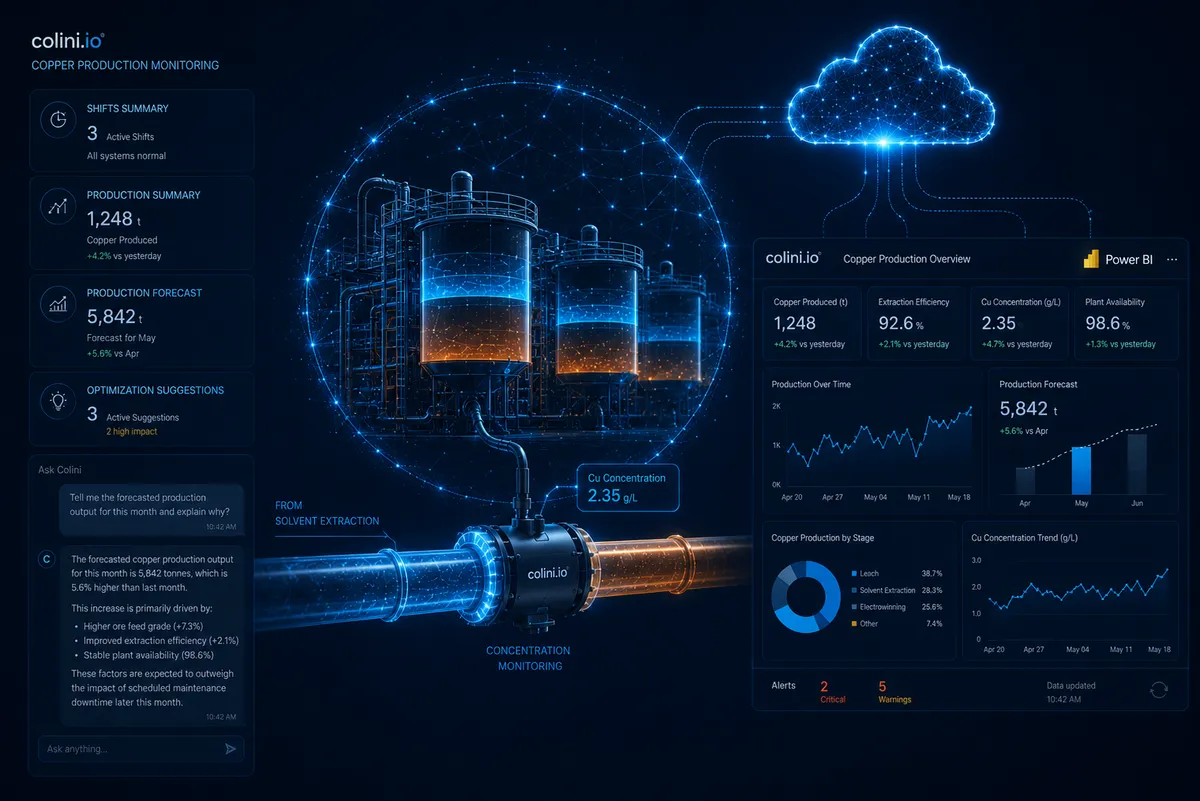
A copper mine operation runs dozens of PLCs and SCADA controllers across a large, distributed site. We built a unified data layer that aggregates readings in real time and surfaces them on live dashboards. Where physical sensors weren’t practical, computer vision filled the gap — monitoring conveyor flows, equipment states, and access points with cameras instead.
What we built
- Unified data layer — all controller and sensor readings consolidated in real time, regardless of vendor or protocol
- Live dashboards — operations teams see the full site in one place, with configurable alerts and trend views
- Computer vision sensors — cameras cover flows and equipment states in areas where physical instrumentation wasn’t feasible
- Natural language queries — staff ask questions in plain English (“what’s the throughput on line 3 since shift change?”) and get immediate answers
- AI agents — continuously track performance across the full mine structure and recommend actions before issues have a chance to develop
Outcome
Operations teams moved from reactive incident management to proactive site-wide oversight. The combination of unified data, visual sensing, and conversational access means the right information reaches the right person, fast — without requiring specialist tooling knowledge.